
What is shockwave therapy?
Shockwave therapy is a method designed to relieve symptoms associated with various conditions, such as calcific tendinitis of the shoulder, heel pain or kidney stones. Medical professionals also refer to the treatment as extracorporeal shockwave therapy (ESWT), as it is administered outside the body.
Patients often wonder how shockwave therapy works. Specialists distinguish between focused and radial shockwave therapy. In focused shockwave therapy, the doctor or therapist directs a device, known as a transducer, at the area of the body to be treated. The device then generates the shockwaves. These are mechanical pulses that create high pressure. The shock waves strike the area of the body in a concentrated beam and penetrate the layers of skin, muscle and fat. Only when they encounter a hard obstruction, such as a kidney stone or calcification in the shoulder, do they release their energy. If shock wave therapy is successful, the shock waves break up the stones and calcifications, thereby relieving the symptoms.
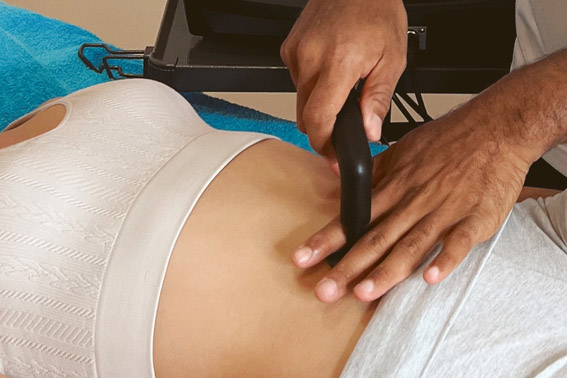
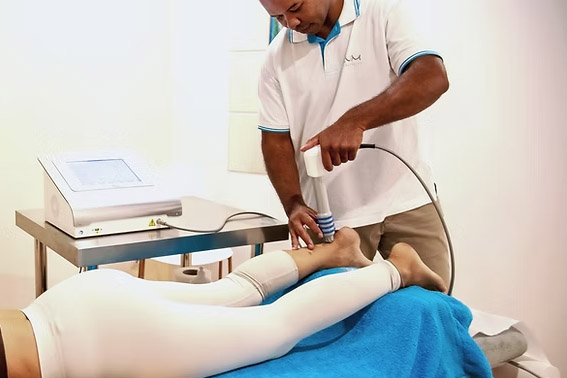
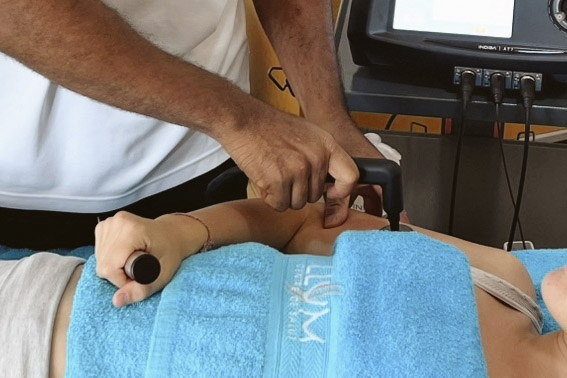
Orthopaedics: Shockwave therapy can help in the following cases:
Shockwave therapy is primarily used to treat heel pain.
Shockwave therapy can remove calcium deposits in some patients. It is therefore used, for example, in patients with calcific tendinitis of the shoulder. In this condition, calcium deposits build up at the tendon attachments in the shoulder.
Shockwave therapy can also be used for tendon irritation – such as in tennis elbow or golfer’s elbow. In these conditions, the tendons on the outside or inside of the elbow are strained by repetitive movements such as playing tennis or golf, manual work or computer work.
Shockwave therapy can also be used on the knee and hip for osteoarthritis, and on the back for muscle stiffness.
However, there are a number of criteria that generally rule out the use of shockwave therapy. These include, for example:
- Pregnancy
- Blood clotting disorders
- Pacemakers
- Tumours and acute skin inflammations within the range of the shock waves
Furthermore, shock waves must not be directed at the lungs, intestines, brain, spinal cord, nerves or major blood vessels.